

Kitchen Series: Cookware
We all feel good about buying organic vegetables, grass-fed meat and avoiding seed oils, but sometimes forget about the pans holding it all together. Your cookware matters just as much as your ingredients.
Cookware is used daily and when it’s exposed to heat or scratched it can cause chemicals to leach into your food or the air you breathe while cooking. Even when it’s not on the stove or in the oven, it’s often washed with hot water or dried with heat in the dishwasher. In this part of the Kitchen Series, we’ll be focusing on pots, pans, and bakeware that we love cooking with.
Always Good Choices
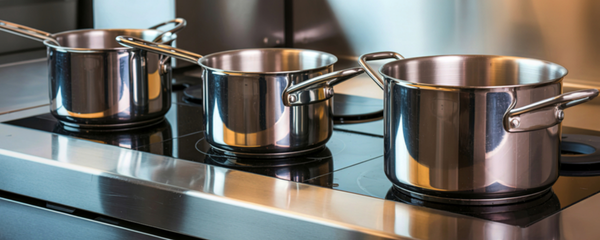
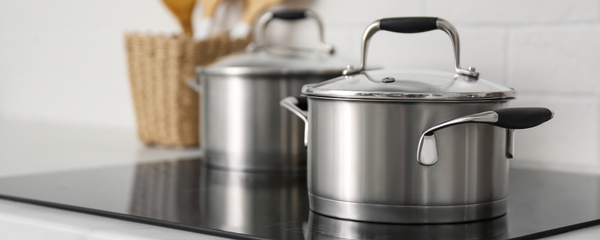
Stainless steel
Stainless steel clad cookware is made by combining different metals into a single sheet, including nickel, chrome and iron.
Quality matters: low-grade stainless steel can leach materials, like nickel, into food while cooking, so always choose premium/high-grade options.
When choosing cookware, look at the number of layers, 3, 5 and 7-ply are all great options.
Moo tip: the key to preventing food from sticking is to preheat your pan for a few minutes. Once it’s hot, add a few drops of water. If they sizzle and glide across the surface, the pan is ready for a light coating of oil or butter.
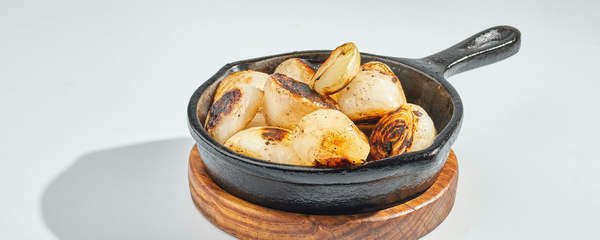
Cast-iron
Cast-iron cookware is made of mostly iron, with low-quantities of other elements, like carbon and manganese.
Iron can leach into food when using cast-iron to cook, especially when cooking with acidic foods or cooking for hours on end. Consider your iron levels if choosing this option of cookware.
With enamel coated cast-iron, it’s good to make sure the coating is free of PFOAs. We prefer traditional cast-iron, because the enamel wears over time and exposes the cast-iron underneath the enamel.
Moo tip: seasoning a new cast-iron pot helps create a naturally nonstick surface. To do this, wipe on a thin layer of oil, bake upside down at 450°F for an hour, then cool. To prepare a cast-iron pan for cooking, start by heating it over medium heat for a few minutes. Add a small amount of oil and let it heat until it shimmers. Wipe away any excess with a paper towel so only a thin layer remains.
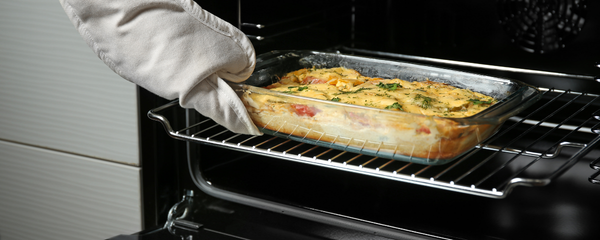
Glass Bakeware
For oven use, aside from stainless steel and cast-iron, we also use glass bakeware. Borosilicate or soda-lime glass is recommended, but make sure your glass baking dish is lead free.
Glass is non-reactive, so it won’t absorb odors or leach chemicals into your food, making it a great low-tox option.
When handled carefully, glass is a lower maintenance option that doesn’t shed particles or coatings into food and also won’t warp, rust, or require seasoning over time.
Some older and imported glass bakeware has been found to have lead in it.
Moo tip: you can lightly grease glass with oil or butter to prevent sticking, which avoids the need for aluminum foil or disposable baking paper.
A Few Caveats
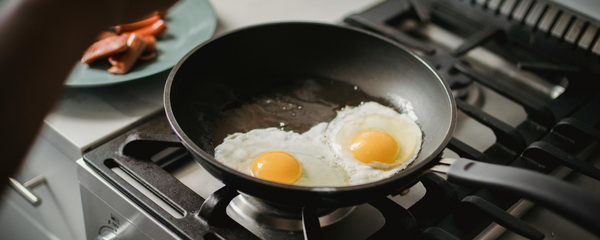
Traditional nonstick/ Teflon
Traditional nonstick cookware contains polytetrafluoroethylene (PTFE), often referred to as Teflon, and other per- and polyfluoroalkyl substances (PFAS).
Perfluorooctanoic acid (PFOA) is no longer used in cookware production in the U.S., but fluorinated (“forever”) chemicals are still used to make nonstick coatings for pans. It is possible that older cookware or imported cookware contain PFOA and other forever chemicals.
When exposed to high heat, nonstick cookware can start to degrade or melt and release unsafe fumes into the air and food you’re cooking. High heat ranges from anything higher than medium heat or above 500 degrees Fahrenheit.
Scratches are another concern with nonstick pans. Even a small scratch can cause the chemicals to leach into your food.
Exposure with PFOA’s and PTFE’s has been linked to reproductive and developmental effects, cancer and other adverse health outcomes.
Moo tip: nonstick cookware is also very common in other kitchen appliances, like toaster ovens, pressure and rice cookers, air fryers and baking trays. We know changing everything may not be feasible and recommend safer use as an alternative, like keeping temperature below high, using ventilation and checking for scratches when using nonstick products.
Aluminum
Cookware made with bare (non - adonized) aluminum has raised some concerns because of the unknown effects of long-term consumption of small amounts of aluminum from cooking.
It’s possible aluminum can leach into food while cooking acidic foods due to aluminum cookware being reactive.
If you use aluminum cookware, we recommend using it to cook non acidic foods, checking for scratches and confirming that the product doesn’t contain lead with the brand or manufacturer.
Moo tip: hard-anodized aluminum cookware is a safer alternative to bare aluminum, but we recommend looking into any additional coating that’s added to make the pans nonstick.
Sources:
https://ireadlabelsforyou.com/right-use-cast-iron-pots-and-pans/
https://madeincookware.com/blogs/safest-stainless-steel-cookware
https://www.epa.gov/pfas/our-current-understanding-human-health-and-environmental-risks-pfas
https://pmc.ncbi.nlm.nih.gov/articles/PMC10386729/
https://www.fda.gov/food/environmental-contaminants-food/lead-food-and-foodwares
